Search This Blog

Showing posts with label antique reproductions. Show all posts

05 August 2011

Approaching "Timeless Design"


Faint blue walls with gold toned furniture and accents. The wall color is close to Benjamin Moore, Stone White. Source


How do budget-conscious, young women decorate their homes today so that in 10, 20, or 35 years, we’ll still LOVE it?

·         Hire a designer?
·         Only purchase classic antiques or reproductions?
·         Splurge only on trendy accent pieces like rugs and pillows?

Since decorating styles cycle, it may be impossible to create a timeless home that won’t eventually bore you or require updating.


A timeless look by Jeff Harr Photography


Right now, trending styles include gray and whitewashed color schemes with European influences….been to Pottery Barn or Restoration Hardware lately? What's interesting is that the 'hot' furniture right now includes antique replicas, or reproductions.


...and I LOVE this trend.

So, if your home reflects your personal style, you’ll love it.

But personal aesthetics change. Will this white-washed look remind everyone of the 2010s in 2040?

Really, there’s no way to stay safe from evolving styles, patterns, and fabrics…especially if you naturally enjoy decorating. After all, isn’t it “the hunt” that makes decorating so fun!?

A rule of thumb is to change out the textiles, paint, and accessories every 10 years to keep your home fresh.
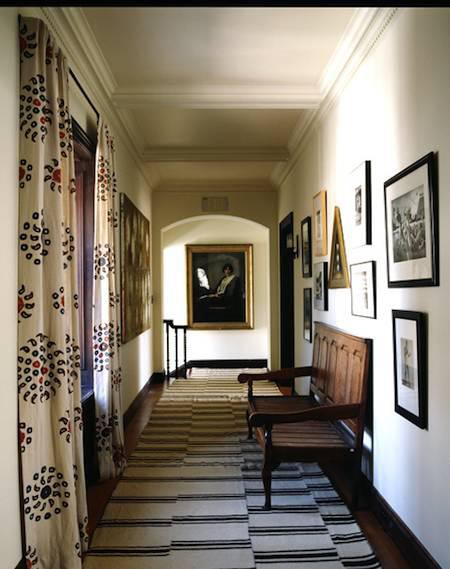
Designed by Kathryn Ireland of Million Dollar Decorators

But, it is possible to have a home which only requires tweaks…if it’s filled with antiques....


Antiques…never go out of style.

Antiques or reproductions can really ground and warm-up a room. They give homes a level of sophistication. I love wood furniture and interesting wood grains. Most antique reproductions are solid, inviting, and comfortable. They can handle wear and tear. You can also have your antique furniture professionally painted, if you wish!

Room designed by Miles Redd

The use of antiques in the room above make it hard to tell what period it was created in...The lines in the antique furniture give it that everlasting grace. This room is a bit formal for my tastes, but that doesn't mean I wouldn't find similar pieces, like the rug, the chest on the back wall, or the lamps.  Antique furniture doesn't have to be this dressy...see more below.

John Saladino

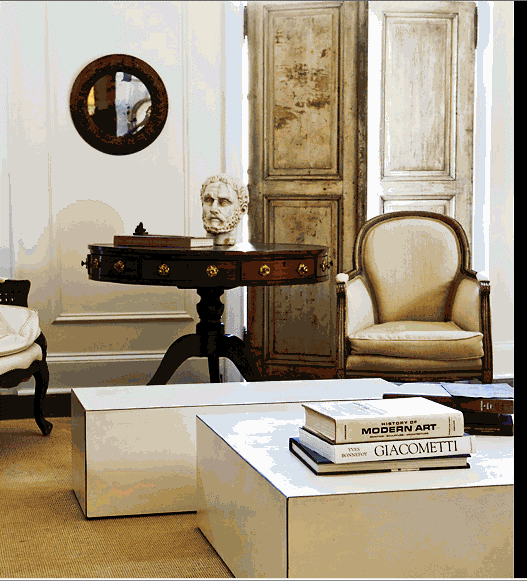
Another way to design your home so it stays fresh-looking is by cleanly mixing styles, like modern and classical. Darryl Carter is a newer designer who has received attention for his ability to put seemingly unrelated items in a room to create comfort. 


This small space is so interesting! Antique chairs, mirror, round table, and weathered doors mixed with contemporary coffee tables
Darryl Carter, Simon Upton Photography


Darryl Carter Design in Elle Decor. Even though this room is so interesting, it holds classic pieces.


Mid-century furniture is hot right now...but be careful of purchasing more than a few pieces for your house. Filling an entire home with period-pieces won’t achieve ‘timeless and traditional.' 

Source. This room feels cold and sterile to me. Are the owners of this home going to appreciate the style for 30 years to come?


Look at these next photos...can you guess when they were photographed?
Timeless and traditional, warm and elegant. Photo from Pinterest.


You or I could guess, but we may be surprised.

What do you think? Is antique furniture something you would purchase today?


Thanks for stopping by!

Tara

06 July 2011

American Colonial Furniture and Antiques

Hope Y'all had a Happy Fourth of July!


This past Monday, after leaving the lake, I went with my dad to my grandparents home to pick up an old vanity that belonged to my grandmother. My grandfather had painted it with brown paint. It’s a heavy piece of furniture that I figure they purchased mid-century.


I am trying to decide whether to refinish myself or have it redone professionally. Here are some things that I will use to help me make my decision.


Antiques: 100 years or older. Restoring antiques should be left to the professionals. Restoring usually includes fixing broken legs, replacing hardware, repairing cracks, replacing trim pieces and fabrics with period detail. Basically anything that's required to get the piece of furniture as close to the original condition as possible is called restoration.


Refinishing can be as simple as stripping off the top layer of varnish, sanding, and applying a new one.


Contemporary American Colonial. Source


Steps to refinishing a piece.


1) Do a little research to determine its value, so you know whether or not you should try and restore it yourself.


There are a few things that you can look for to determine a piece of furniture’s age. Feel underneath—if the interior corners are sharp, then it's probably not an antique. Take out a screw and look at the threads. If they have inconsistent widths between them, then it's probably pretty old.


2) Clean Before You Start
A good place to start is to give it a good scrub with a sponge and some vegetable-based oil soap in warm water.


3) Sanding: start off with heavy-grit sandpaper, then move to finer grit.
Whether you're painting or staining, once you finish stripping and sanding, you'll want to give it another good cleaning. A clean surface is key to creating a professional finish.


4) There are many different kinds of stain, and each works best with different woods, so be sure to thoroughly research your options before proceeding.


So, as I’m cruising along the internet  ‘doing a little research’ I came across more information about wood. So I figured I’d post this information as a  continuation to  “What is Your Furniture Made of?” You can find more information from my source, here.


Before 1900 (20th century), most furniture was made with these woods:
  • Walnut, Oak, Mahogany, Rosewood, Fruitwoods, and rare wood veneers and inlays were common
American Colonial furniture, dependent on local availability, was made with maple, oak, walnut, birch, cherry, and pine. Because preferred furniture woods was readily available, (and less attractive/durable wood was only used for hidden, inside parts), pre-1900 furniture is almost always worth restoring.


Photograph by Miguel Flores-Vianna
As the 'preferred wood' became scarcer and more expensive, furniture started being made from more abundant woods, causing the traditional favorites to become rare.


The “more abundant woods” used today are
  • Ash, gum, poplar, pine, fir
How to Assess Wood
How do you begin to identify the type of wood used for your furniture? Ask yourself some key questions:
  • Consider the piece of furniture itself. About how old is it, and what style is it?
  • Look at the color. Although color can vary considerably from tree to tree, its tone is fairly constant within a species; the color intensity may change, but not the quality. 
  • Finally, look at the grain. Is the wood open- or close-grained? Are the pores evenly distributed, or are they concentrated at the growth rings? Is the grain straight or wavy, mottled or swirled?
Wood identification can sometimes be the deciding factor when you aren't sure if a piece is worth refinishing or if it should be thrown away. There's a good chance that a beat-up old dresser was built with what is considered a rare wood, today.


Wood Characteristics
A practical way to identify wood (and thus its value) is by its grain and color.


Wood grain and color: The cell structure of a tree, different for each species, determines its grain. Hardwoods have tubular cells called vessels that are visible as pores in the wood. If the cells are large, the texture of the wood is slightly rough, or open; a filler may be needed to smooth the surface. If the cells are small and has a smooth texture, described as close-grained, it doesn't require filling.


Open-grained woods: Oak, walnut, ash, mahogany, rosewood, and teak woods
Close-grained woods: Beech, birch, maple, cherry, satinwood, gum, and poplar woods
Furniture woods are chosen and valued for the character of their grain and color. This is why the old finish must be completely removed before you can tell for sure what wood a piece of furniture is made of.


Veneers
In old furniture, veneers and inlays of rare woods were often used to form designs or special effects. In modern furniture, veneers are used primarily where solid wood is unavailable or too expensive.
Veneers are fragile, and they can be damaged by refinishing techniques. Veneers are common in modern furniture construction, so take a good look at your furniture before you start to work on it. Any highly figured wood is probably a veneer.


Tips to determine if its vennered
  • Sometimes the veneer is visible at the edge of the wood surface, a thin layer glued over the base wood.
  • If you can't see a joint at the edge, look at an unfinished area under the piece of furniture. If the unfinished wood looks the same as the finished surface, the piece of furniture is probably solid wood. If there's a considerable difference, it's probably veneered.
Wood combinations: Many types of modern furniture are made with two or more kinds of wood, to keep costs down. Rare woods are used where appearance is important, such as table-tops; the more common woods are used for less conspicuous structural pieces, such as table and chair legs. This multiple-wood construction isn't always easy to see until the old finish is removed -- a table you think is walnut, for example, may turn out to have gum legs, stained to match.


This Corsican chair, found on 1st Dibs, is asymmetrical and made from an astounding array of hardwoods including:

Ask, Beech, Spalted Beech, Cherry, Cocobolo, Zebrano, Indian Rosewood, Oak, Birds Eye Maple, Sycamore, Yellow Box, Pau Rosa, Wenge, Padauk, Bubinga, Sapele, Mahogany, Pear


...But don't be mistaken, this chair was not made with all these woods to keep costs down!  It was done as a project and will cost you an arm and a leg...if you get a deal.


Back to my vanity at hand
It's a heavy piece of furniture. I scratched off some of the brown paint to view the wood underneath. It has a light reddish tint. First guess, I would say that my grandmothers vanity is a red oak, but it probably isn't old enough to be a traditional favorite. It could be beech, poplar, sycamore or willow. I need to investigate the grain more, but not until I can get the piece stripped. Although my grandmothers vanity probably isn't an antique or an American colonial, it's still a valuable piece to me.


Red Oak

Beech


Poplar

Willow


Sycamore


Tara