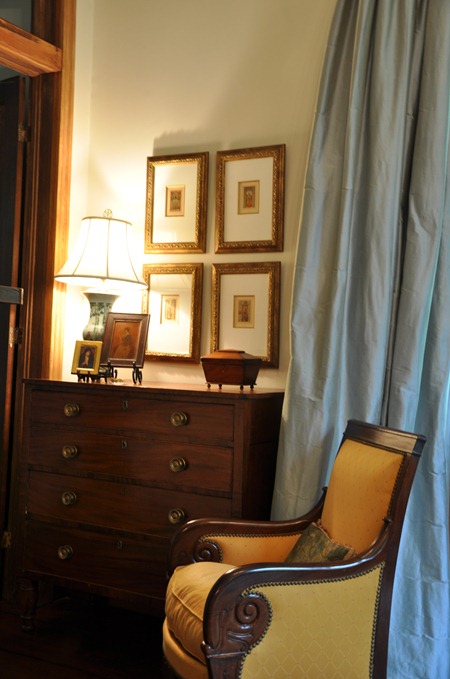
I enjoy looking at real estate, especially expensive real estate. It's nice to see different styles, architecture, and timeless design.
Below are some of the homes around Dallas that are currently on the market. Of course, I posted ones that I think are really lovely or interesting. The homes in Dallas showcase influences from a good mix of styles.
Below are some of the homes around Dallas that are currently on the market. Of course, I posted ones that I think are really lovely or interesting. The homes in Dallas showcase influences from a good mix of styles.
3236 Bryn Mawr Drive, University Park
$1,149,000


The ceiling in this home adds so much interest. I also really like the bookcase that surrounds both sides of the doorway. The fireplace in the corner is a nice touch too. It's nice to see these expensive homes offer something unique and custom.

I'd put a soft chair in this corner and do some reading, or blogging!


I love homes with harwood floors in the kitchen
People sometimes hesitate using hardwood in a kitchen. But—there’s only one floor that will do better in a flood scenario—tile. And even tile doesn’t always survive a broken pipeline.
Solid wood floors can withstand more than manufactured wood. Engineered floors like plys with a hardwood top do better than laminate flooring (which really isn’t wood at all).
Hardwood floors look good with some wear and tear. If you use a solid lumber, 3/4” thick it will wear better than wood that’s only a few millimeters thick.

Highland Park $1,600,000
The listing called it "A bygone era of style--1930s mediterranean style home." A true mediterranean style home has a stucco exterior--requiring a home to be built of brick with stucco added over it. This home, you can see below has a brick exterior. In mediterranean interiors, walls are usually textured.
But I like brick homes, especially if they're painted...like this one:

But I like brick homes, especially if they're painted...like this one:


I like the use of color in this home. The rugs are also really great.

Seagrass rug.

Sitting area inside the masters suite

Love the color in this room! The rug is a neutral pallete with colors popping from the blue silk curtains, green chairs and patterned pilows. The chairs across the room have a pattern to them, but it's hard to tell what it is.
The curtains are at a good spot, a few inches from the ceiling...all the way around the room.
There is something else great about this home--the designer didn't use a lot of "recessed canned lighting." Instead they used chandeliers, lamps and of course, natural light! The canned look not only looks ugly, but it doesn't feel as home-y.

The molding design at the top is impressive.

I am liking this backsplash and the oven hood. This is a white kitchen that works. But why did they place the curtains halfway up the window?

5422 Merrimac Avenue Dallas 75206
$549,900

This is a nice little 1927 Tudor home on the M Streets. It's a designated historical home.


This property is also for rent at 3,000 a month.

5316 Waneta Dr. $739,000
Greenway Parks

I just love the architecture of this 1931 Tudor!
Designed by C.H. Griesenbeck, is quite the charmer. Tall ceilings, a flowered courtyard with saltwater pool, and a gourmet kitchen are just for starters.


This floor is perfect with these white cabinets. I am starting to belive that all-white kitchens just aren't very easy to take photos of (without a photography crew preparing lighting, etc.) and are probably hard to keep clean.

So pretty.

I love how these curtains puddle a bit at the bottom. They seem so elegant.

3709 Gillon Avenue, Highland Park
$5,949,000

Built in 1983, this Neo-Classical residence was renovated in 2008 with a Palm Beach chic feel. The home showcases wide-plank oak floors with French limestone. Dome skylight with hand-forged ironwork.
I don't really like this type of grandoise exterior, but the scrolling wrought iron, windows, and greenery are nice elements. I like a lot of things about the inside of this home too...

I don't really like this type of grandoise exterior, but the scrolling wrought iron, windows, and greenery are nice elements. I like a lot of things about the inside of this home too...


Formal dining room. There's some type of mirrored tile on the walls adding glitz and lots of reflection to the room.

I like this kitchen a lot. I really like the black door and window trim.
The kitchen counters are corian. The wood floor is painted with a black pattern to match the trim. The wooden beams on the ceiling are also painted black to match. Beyond the black beams is a weathered wood ceiling. There was so much detail given to this room.

This home has been on the market for 184 days. This rug matches the one in the kitchen. Golden with a hints of blue and red. This room has a lot of symmetry.
 I love the silvery blues in this bedroom. This home has 7 full bathrooms!
3708 Maplewood
$3,599,000

Located between Preston and Hillcrest, this Cape-Cod style home was built in 1917. Highland Park's first development was in 1907.


They used 2 different types of wood on the stairs to create the dark/light combination.

Seagrass and a monochromatic look. Antique, french furniture throughout.
I like the popped out window. I wonder if that is original architecture?

The entry way also capitalized by using 2 different kinds of wood-lovely!


I like the different patterned slipcovers for the chairs and a seemingly unrelated deer rug underneath.
Dallas has a nice and diverse collection of historic or architecturally significant houses. These homes sprung up in the early 20th century, when business was booming and many high-end neighborhoods were being developed.
Local architects are largely responsible for the homes—like Clifford Hutsell, who designed a Spanish eclectic house for himself in the 1920s, and Charles Dilbeck, who later became known for the Texas Ranch—but some notable architects from all over the country came to work in Dallas, too. In older neighborhoods like Highland Park and Lakewood, you'll find colonial revivals, craftsmans, roursquares, Spanish mediterranean and tudor houses.
To learn more about Dallas's historic neighborhoods and available homes, visit www.architecturallysignificant.com.
Thanks for reading!
Tara
Local architects are largely responsible for the homes—like Clifford Hutsell, who designed a Spanish eclectic house for himself in the 1920s, and Charles Dilbeck, who later became known for the Texas Ranch—but some notable architects from all over the country came to work in Dallas, too. In older neighborhoods like Highland Park and Lakewood, you'll find colonial revivals, craftsmans, roursquares, Spanish mediterranean and tudor houses.
To learn more about Dallas's historic neighborhoods and available homes, visit www.architecturallysignificant.com.
Thanks for reading!
Tara